
Nepal has been a Federal Democratic Republic since 2008, having emerged from 10 years of civil war and abolishing its monarchy. Yet, four coalition governments consistently failed to write a meaningful constitution and much of the country remained in a state of instability. As part of the broader Public Interest Program in Nepal, these political and social challenges highlight the structural barriers that communities continue to face. The issues of health, welfare, lack of infrastructure and susceptibility to natural disaster still overshadow the country, demonstrating the overwhelming distance that developing Nepal has yet to travel. It wasn’t until the year of the devastating earthquake in 2015 that a constitution was drafted by the Second Constituent Assembly following the failure of the First Constituent Assembly to produce a constitution in its mandated period.
Different rural communities in Nepal are still deprived of basic life facilities like electricity and access to drinking water. They have to walk hours to reach a health post which is not well equipped with either medical equipment or medical personnel. As a result, they face a disproportionate burden of chronic diseases in comparison to the general public due to restricted access to quality health care. Access to education and employment is also limited. Social problems like inequality, caste system, untouchability, child marriage etc. have been constantly destroying the lives of many. Poverty, as prevalent as it is in rural Nepal, only continues to grow.
The Government of Nepal has not been able to address the needs and concerns of every section of the population depending on their nature of problems. The government currently provides a sum of Nrs. 2,000 monthly to elderly people aged 70 and above. However, this mere sum is not enough for a person to fulfill all their basic needs like food, shelter, health facilities and more. They ultimately become a burden to a low-income household and end up either on the streets or in old age homes.
Mental health is yet another Public Interest area that is least prioritised and requires immediate attention. It is still a taboo and anyone suffering from mental health conditions is considered unfit for society. As a result of stigma and discrimination, people prefer to stay home and keep a low profile rather than seek professional help. In 2013, a study showed that 37.5% of Nepal’s population suffer from mental disorders, a figure that continues to rise. Less than 1% of health care expenditures by the government are focused on mental health. And out of 75 districts, only 7 district hospitals in Nepal provide mental health services. As astonishing as it may sound, there are only 1.5 beds per 100,000 population for mental health patients. There is no significant advocacy from the government’s side regarding mental health. As a result, people remain unaware and uninformed. Ultimately, many individuals with mental health conditions end up on the streets with escalated suffering, being abused and exploited.
The major goal of the Public Interest Program in Nepal is to contribute toward the betterment of vulnerable and marginalized groups by addressing their immediate needs and supporting their long-term wellbeing. Volunteers Initiative Nepal (ViN) has been working for years to uplift communities that continue to face barriers to education, health care, livelihood opportunities, and safety. Through this programme, ViN seeks to empower individuals and families who are often left behind due to poverty, social discrimination, and limited access to essential services. The Public Interest Programme acts as a bridge between community needs and sustainable solutions by combining local leadership with volunteer support.
Volunteers Initiative Nepal is now looking for committed volunteers and interns who want to make a meaningful impact. Our Public Interest Programme operates both inside and outside our primary focus communities, offering diverse placements for individuals with different skills, backgrounds, and areas of interest. Whether you excel in manual labor, community planning, research, advocacy, education support, or motivation, your contribution can strengthen Nepal’s fragile public systems and help vulnerable people gain access to opportunities they have long been denied.
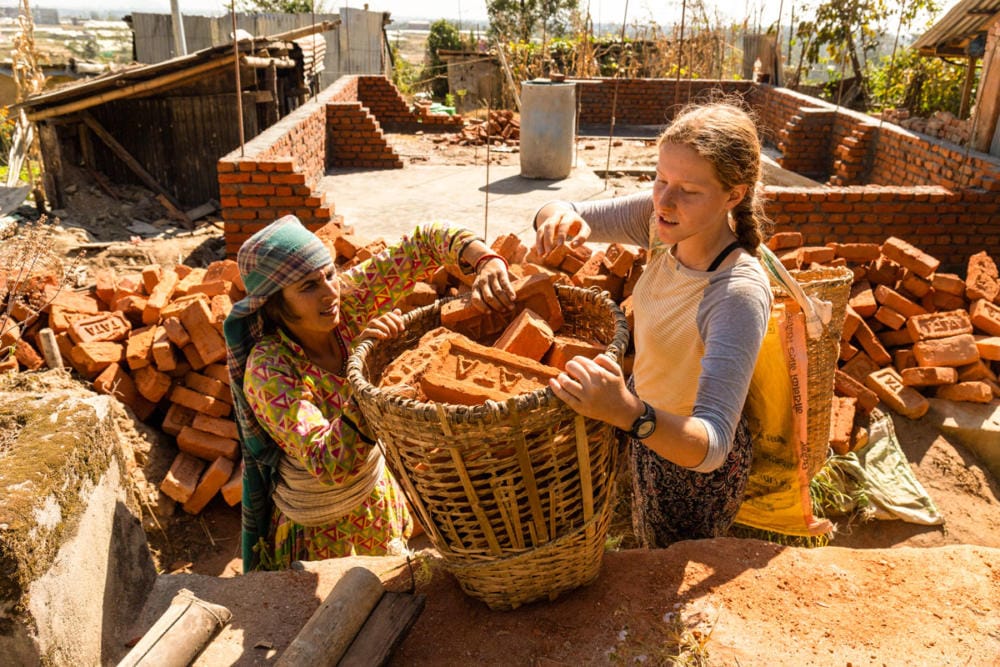
Volunteers may support construction and rehabilitation efforts by helping build vital village structures such as schools, toilets, sanitation facilities, drinking water systems, and community learning centers. These activities directly improve the daily lives of rural families who have historically lacked basic infrastructure. In addition, volunteers can pass on valuable skills through training workshops, awareness campaigns, and one-to-one support—helping communities grow more resilient and informed.
For those passionate about social care, ViN also encourages participation in initiatives that support the elderly population, many of whom lack family support or adequate government assistance. Volunteers can help create a culture of care and dignity by spending time with senior citizens, supporting elderly homes, and advocating for improved social protection.
By joining ViN’s Public Interest Programme, volunteers and interns become part of a larger mission to create fairer, healthier, and stronger communities across Nepal.
What areas does the Public Interest Program In Nepal focus?
The Public Interest Program in Nepal focuses on several key areas that directly impact vulnerable communities across the country. Through its diverse programmes, the Public Interest Programme has put a major focus on improving the quality of life for those who are often overlooked or underserved. These initiatives aim to respond to urgent needs while also creating long-term, sustainable improvements in health, wellbeing, social inclusion, and community resilience.
Elderly care – Care for the aging population is vital for their overall well-being and development. Many elderly individuals in Nepal lack adequate family support, income, and access to services. Through the Care for the Elderly project, VIN aims to enhance and improve the everyday life of elderly people who are under the care of old age homes. Volunteers provide companionship, emotional support, and assistance with daily activities, ensuring senior citizens experience dignity and comfort in their later years.
Animal care – Volunteers are placed in animal shelters where they engage in the day-to-day grooming and care of rescued animals. They interact closely with animals, offering love, socialization, and support for their successful reintegration or adoption. This programme helps improve animal welfare in communities where abandoned or injured animals often lack protection.
Life skill development – Various life skill development projects are conducted for women, youth, and children in marginalized communities. These skills are customized according to their needs and the demands of their environment. Training may include confidence-building, communication skills, vocational skills, leadership development, and more—helping participants become more self-reliant and empowered.
Health care – VIN focuses on both physical and mental health through its Public Health and Medical Care Programme. Volunteers work with doctors, assisting them in treating patients. They also conduct awareness sessions on public health issues and provide one-to-one or group counselling to enhance the mental health of community members.
Construction and Manual work – The Reconstruction and Sustainability project focuses on building community centers and houses destroyed by the massive April 2015 earthquake. Volunteers contribute their skills and knowledge to help build environmentally sustainable structures designed to reduce future climate-related risks.
Emergency Relief and Disaster Management – Emergency relief activities are conducted through VIN’s Disaster and Risk Reduction (DRR) Programme. These projects support communities affected by natural disasters and aim to restore their lives back to normalcy by providing essential supplies, assessments, and ongoing recovery support. Know about us more…
What has VIN achieved in the Public Interest Programme by 2020?
 Volunteer
 Intern
 Donate
 Sponsor a child
 Partner
 Promote
 Fundraise
 Fellowships and staff exchanges
Gallery
 Member of